
A Weekend with Mie Teas
Updated: Jun 30

Over the Easter weekend, we had the pleasure of sharing the teas of Mie Prefecture. It was a joy to see the room filled with guests discovering and enjoying the character of Mie green teas together with us.
In the weeks leading up to the event, we spent many hours calibrating the teas, adjusting temperatures, ratios, and brewing times. Through the process, we found ourselves learning even more about the depth and nuance of green tea. It was a gentle reminder that tea always has more to teach, even to those who work with it every day.

Guests began the experience with kabusecha tea jelly and Japanese sweets, followed by a warm tea flight where they were invited to taste and identify different green teas. We featured Sencha, Kabusecha, and Gyokuro — each showcasing different cultivars and levels of shading, resulting in distinct flavour profiles.


煎茶 Sencha | かぶせ茶 Kabusecha | 玉露 Gyokuro | |
Cultivar | Saemidori, Yabukita, Mie Uejima | Saeakari | Yabukita |
Shading | Unshaded (Full sun) | Light Shading (7-14 days before harvest) | Heavy Shading (20-40 days before harvest) |
Umami | Light | High | High |
Mouthfeel | Brisk, Crisps | Smooth, Silky, Rounded | Medium-bodied |
Taste Profile | Light, fresh, clean | Savoury, Sweet corn | Deep, Vegetal |
Among the teas shared was Kabusecha cultivar Saeakari (さえあかり), a relatively uncommon Japanese cultivar grown in small quantities. Known for its silky umami and gentle sweetness, Saeakari is rarely encountered outside Japan. Its aroma often brings to mind boiled corn or edamame. (Saeakari Kabusecha available for purchase here.)

We also explored the differences between a matcha oat latte and a kabusecha oat latte, sharing how true matcha is made specifically from Tencha, which are shade-grown leaves that are slowly stone-ground into powder.

Alongside the teas, we also spent many hours developing the food for the session. Our hope was that the dishes would echo the flavours and culinary culture of Mie.


We also shared our take on Ise udon, a regional specialty known for its soft noodles and rich tamari-shōyu sauce. It was something we had enjoyed in the region ourselves, and we were happy to share it with everyone present.

One of the most enjoyable moments of the afternoon was having guests to roast their own hōjicha. As the leaves warmed and slowly browned, the room filled with the comforting aroma of toasted tea. It was a simple, hands-on moment that brought everyone a little closer to the craft behind the cup.


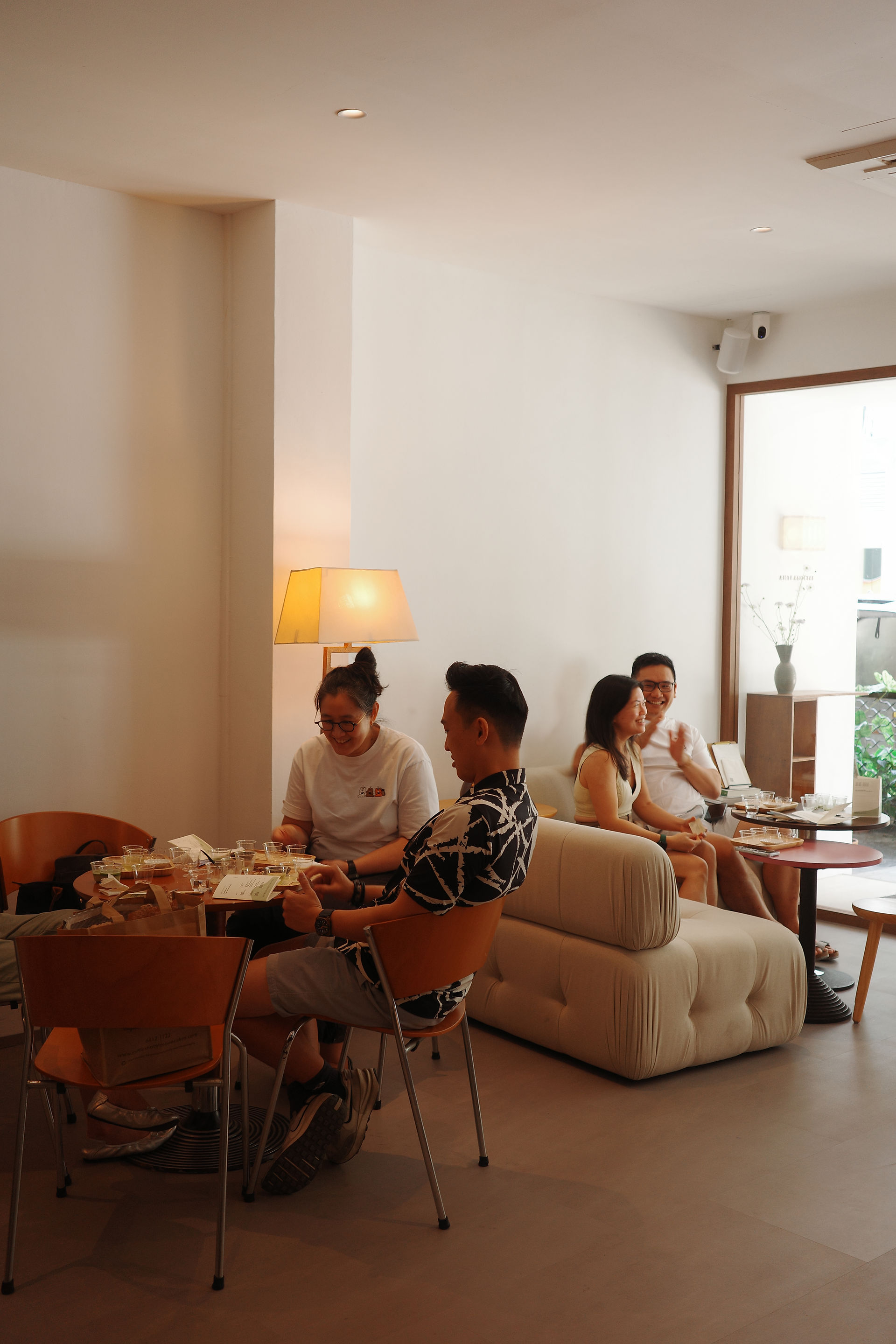


Thank you to everyone who journeyed with us through our teas and snacks from Mie.
Soon, we will also be introducing a limited time menu featuring Japanese teas and confections at the teahouse, where we hope to continue sharing the beauty of Mie with many more people.
Read more about our trip to Mie here.


Comments